
The first time someone called me Amma, I was buying coriander.
This felt about right. Nobody becomes Amma doing anything dignified. You don’t walk out of a boardroom and get addressed as Mother. Unless the boardroom is full of twenty-year-olds, for whom Mother is now the highest compliment going. Said over coriander, it is not a compliment. The promotion arrives somewhere among the vegetables, between the sensible footwear and the new, unasked-for ability to tell a good tomato by touch.
For years I had been Akka, the breezy kind of elder sister. Akka belonged to the future. She could still be called young by people only slightly older than herself. Then one afternoon a vendor I had known for years looked up, weighed me in a single glance, and said, “Nodi, Amma.” No hesitation, no deliberation, no moment in which he held Akka against Amma and arrived, reluctantly, at a verdict. The city had reviewed my file and reclassified me. It did not ask for my consent.
The strange thing is that for most of my life Amma was not a category. It was one woman. My mother could locate the cumin tin without opening a cupboard, and diagnose a household problem by standing in a doorway and looking mildly disappointed. The word meant her. Now it had come looking for me instead, the way a name does once the person who filled it is no longer using it.
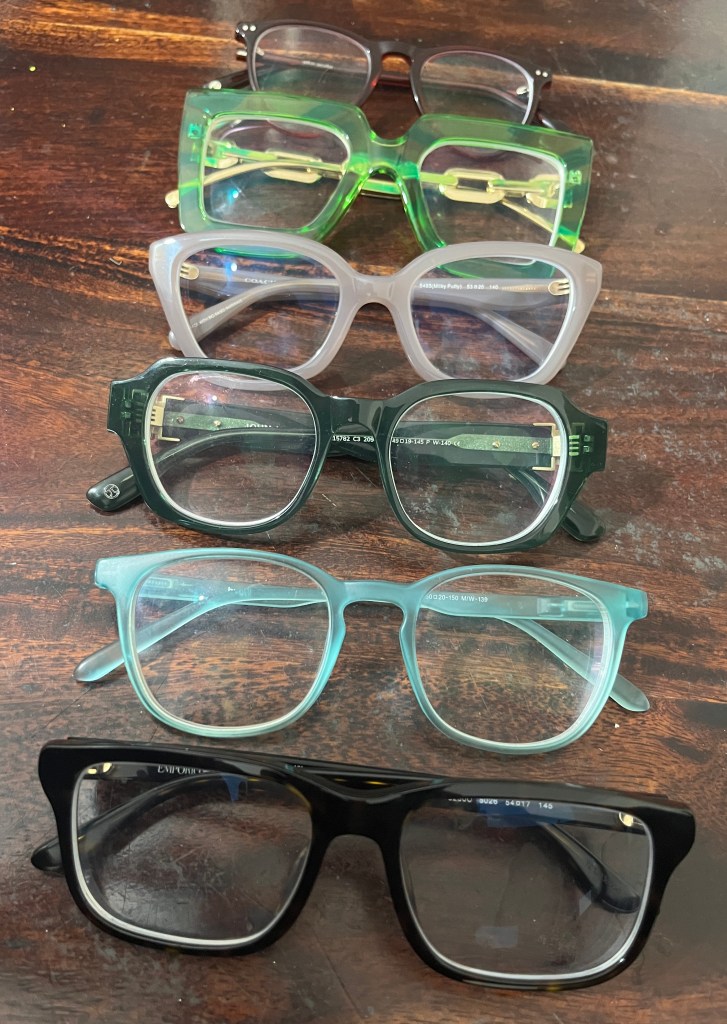
I want to be clear that I had been expecting this. I have, if anything, been preparing for old age with the diligence of someone studying for an exam she fully intends to pass. The reading glasses arrived years ago, and then the little chain to hang them from, so they rest on my chest where the gold used to go. Everyone I know my age has moved to progressive lenses, the way a generation might convert to a new faith. We compare knees. We have opinions about mattresses. Ageing itself has never bothered me; the alternative reviews poorly. I was, frankly, ready. I had bought the equipment.
What I had not prepared for was the second classification, which has nothing to do with the body and arrives from an entirely different direction.
It came by way of an article, one of those mildly vindicating pieces about how people in their mid to late forties and fifties now hold the most disposable income going and spend it simply because they want to, having been overlooked by an industry that watches only the young. A fair point, generously made. Underneath it a cheerful crowd had assembled to note that the boomers, bless them, were apparently having their moment.
I am not a Boomer. The actual Boomers are in their seventies and still running the world, still in charge of most of its wars and nearly all of its money. For them the label has always come with power. But correcting the arithmetic missed the point, and the point, once I sat with it, was bleaker and a great deal funnier than a wrong date. Boomer is not a generation. It is a destination, the place you are sent once you cross a certain line of vintage, whatever year you were actually born. You do not join it. You age into it. The catch is that the Boomers aged into it and kept the corner office. We age into the same word, and make the news only when our portfolios tank because of aforementioned wars. The label is identical, but sadly, the inheritance is not.
Gen X has spent its whole life being the overlooked one, and in this country it had a great deal to be overlooked from. We were the last children of the old scarcity, raised on one government television channel and a multi-year waiting list for a telephone. When ours finally came, my father, a career bureaucrat, taped a note above it that read, simply, “Keep it brief.” He parented the way he governed: with warmth, and a paper trail. Then liberalisation arrived while we were still in school, the shelves filled overnight, and the country’s attention turned, sensibly, to whoever was young enough to shop in the new economy. It never turned back. We were not a market, then we were not a trend, then we were not a demographic anyone built a deck around. Forty years of steady invisibility. And the single occasion the culture finally looked our way, the one time we made the slide, it was to inform us that we had been reabsorbed into our parents. Promoted, at last, into the punchline. You could ask, reasonably, why we bothered having a Gen X at all, if the deal was four decades of invisibility followed by quiet reclassification as the very people we spent our adolescence rolling our eyes at. Which raises a question I would rather not sit with. If they have folded us in with the people who shaped us, were we ever a separate thing at all, or just Boomers with a slightly later start date?
I should admit that I have called people Boomer. Last month I called a man a full decade younger than me a Boomer, because he had annoyed me, for a reason so small I am embarrassed to record it. He was not a Boomer by any measure that exists. That was not the point. The word was simply the nearest thing to hand that would end the conversation and leave him holding the loss, and it worked, because that is precisely what the word is for. I am only now receiving what I once dispensed.
Because that is what the word is now. Not a description, a reply. The thing you drop under something an older person has said in order to retire it, without troubling to answer it. OK, Boomer. It does not engage the point. It files the speaker and closes the drawer.
Being filed that way is a strange and total thing, for everything it steps over. You spend five decades assembling a specific person, with all her particular nonsense intact. I have, for instance, been buying old vinyl. A.R. Rahman, the Tamil scores I wore out in the nineties, when he was new and so, more or less, was I. I own no record player. The music is already on my phone; what I am buying is the weight of it, the proof that it once took up space, that there was a girl here who needed it that badly. The records are older now. So am I. We have both, against the odds and to no one’s particular profit, survived. Five decades of exactly that, the precise tilt of one person. And the world looks at the whole of it, and reaches for one word, and the word was a joke long before I got here.
The unsettling thing, the thing nobody warns you about, is that the joke is permanent. A meme does not age. The actual Boomers will, in time, die, unless the billionaires among them biohack their way out of it. The word will not. It will still be here, waiting, the way it has always been waiting: the last room in the building, the one with no exit and very comfortable chairs. The Millennials will be shown into it eventually, and Gen Z after them, each arriving certain they invented being young, each discovering the room was booked under someone else’s name the entire time.
I will go in too. I have made my peace with the knees, the chain, the glasses riding on my chest. I had thought that was the hard part: the body, the slow handing-over. Nobody mentioned that the body was the easy bit. That the real graduation, the one with no ceremony, is the morning you stop being a generation and become a format. I bought the progressives specially. I wanted to see it coming. I had always assumed it would come for someone older than me. I am only now adjusting to the fact that, these days, there is no one older than me.


Leave a comment