
How a TV Show, a Tote Bag, and Two Decades of Aspiration Shaped Me
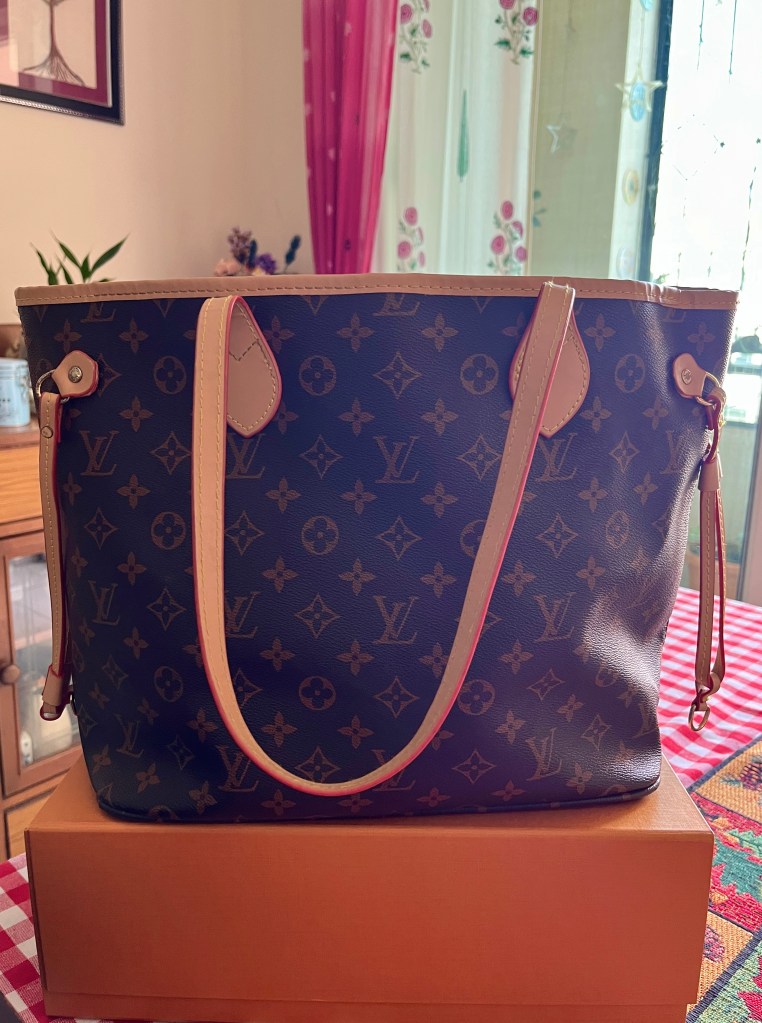
The bag that started it all. Or didn’t
Like many urban, English-speaking Indian Gen Xers, Friends wasn’t just a TV show. It was a rite of passage, a cultural checkpoint we cleared somewhere between adolescence and our first salaried job. We watched it in hostel common rooms, on pirated DVDs, on borrowed laptops with missing keys, all the while performing the great existential exercise of our time: Which Friend am I?
I was, like most of us, a blended masala of the ensemble.
Like Joey, I love food, though unlike him, I do share.
Like Monica, I feel a compulsive urge to wipe down surfaces that are already clean.
Like Chandler, I make jokes whenever I’m uncomfortable, which is often.
And like Ross, I occasionally say the wrong thing to the wrong person at exactly the wrong time.
And then there was Phoebe, my favourite, full of beans, unbothered by convention, the kind of woman who could buy a bag simply because it “felt like a Sagittarius.”
The least relatable Friend, of course, was Rachel.
Prom queen. Perfect hair. Perfect clothes. Perfect confidence. She existed in a rarified, aspirational microclimate, equal parts formidable and enviable.
Her hair alone was a cultural event. Thick, luscious, perpetually salon-fresh, a direct contrast to my Tamil hair, which had (and still has) its own five-year plan. I say “had” because now that I’ve lost most of it, the survivors are far easier to lull into submission.
Her clothes? Let’s just say most of her wardrobe was sized for someone whose entire torso could fit into one leg of my college jeans.
But her tote bags.
That was my point of entry into her world.
Tote bags felt democratic. They were roomy, practical, forgiving. They didn’t require a perfect blowout or a Manhattan salary. They were the first element of Rachel Green that I looked at and thought, Okay, that I can work with.
Because the bags our mothers carried were from a very different universe.
My mother had a stable four-bag rotation that remained unchanged for decades.
Bag 1: A sensible cloth handbag from some saree store in Madras, bought during our annual summer migrations back home. It was sturdy, faded, and roomy enough to hold everything from my brother’s stubbornly incomplete homework to an emergency packet of Parle-G.
Bag 2: A slightly stiffer, slightly shinier “good bag,” meant for respectable social situations: temple visits, doctor appointments, a cousin’s engagement. It was the bag that said, “We are simple people but still have standards.”
Bag 3: An even smaller, even shinier evening bag reserved exclusively for weddings. This one lived inside the Godrej almirah locker, wrapped in soft cloth, smelling faintly of dried rose petals and, of course, naphthalene balls. (Because every Indian household believed moths were in constant plotting mode and only chemical warfare would keep them at bay.)
Bag 4: And finally, the handmade bag, a forever project. My mother was wonderfully gifted with a needle, and every leftover blouse piece in the house eventually transformed into a patchwork handbag. These were colourful, slightly eccentric, and endlessly charming, the closest thing to “designer” in our home, except the designer also cooked, worked, volunteered, took tuitions, raised children, had a penchant for stuffing vegetables, and darned socks.
There were no brand names, no logos, no silhouettes. The bags were like our mothers themselves: reliable, indestructible, and designed to carry everyone’s nonsense without complaint.
So, when I first saw Rachel Green’s Louis Vuitton monogrammed bag, it didn’t look like a bag.
It looked like adulthood.
The kind where you had a job, a life in a big city, a calendar full of plans, and enough disposable income to swing a monogrammed rectangle of coated canvas without flinching.
Just as I was graduating from college and stepping into my first job, the universe played what felt like a personal sign: Louis Vuitton opened its first store in India.
In Delhi, of course, because why should Bombay have nice things unless they’re damp, chaotic, or under construction?
I remember reading about it in the newspapers and feeling a completely disproportionate level of excitement. This is it, I thought. My moment. Rachel Green had her monogrammed tote. I, too, would soon buy my first proper “work bag.”
Except life had other plans.
My actual first work bag wasn’t a tote. It wasn’t even leather.
It was a nylon/polyester backpack, and frankly, it was the only sane choice for someone who was deeply committed to catching the 7:24 am fast local from Andheri to Dadar, Monday through soul-crushing Monday.
There is no version of “elegant working woman vibes” that survives the Dadar flower market at peak hour.
None.
You cannot glide through that universe with a designer bag. You need infrastructure. You need resilience. You need something that can withstand being shoved sideways by a basket of marigolds, the existential humidity of the Western Line platforms, elbow jabs from women who have mastered the ancient art of boarding a local train before it has stopped moving.
And then there was the laptop.
The early laptops we were issued were IBM ThinkPads, which weighed approximately the same as a medium-sized coconut tree. Carrying them in anything other than a backpack was a threat to spinal integrity.
So, out of respect for my back and basic survival, I postponed my Rachel-Green adulthood. The tote could wait. My vertebrae could not.
Before I could even finish adjusting my spine to the IBM ThinkPad, something miraculous happened: Louis Vuitton opened a store in good old Bombay.
Was the dream right there?
Sort of.
Because the “store” wasn’t a full store so much as a small, jewel-box corner inside the Taj Mahal Palace Hotel at Apollo Bunder. Still, it was LV. It counted.
I immediately decided I needed moral support, specifically from my classmate at Alliance Française, the girl who always topped the class and ruined the grade curve for the rest of us. She was the only person I knew who could pronounce Louis Vuitton without sounding like she was ordering a vada pav. She agreed to come along, reluctantly, perhaps sensing that nothing good ever comes of twenty-year-olds with shiny nylon backpacks attempting luxury fieldwork.
This was also the first time I ever went inside the Taj Mahal Hotel, and it was magnificent. Even the air-conditioning felt like it had completed finishing school. One day I will write a separate essay about my fascination with taking selfies in the powder rooms of fancy hotels. They’re basically art galleries, but with better lighting.
Anyway, we marched confidently toward the tiny LV enclave, only to be stopped by a polite but firm sales associate who explained that you needed an appointment to enter.
An appointment.
To enter a shop.
In 2000-something India.
Where most of our shops still had dust, bargaining, and ceiling fans threatening to fall.
We had no appointment, no plan, nothing except earnest faces and backpacks that still smelled faintly of computer plastic. The associate must have taken pity on us, because after a moment of silent judgment, she finally said, “Okay, you can come in for a few minutes.”
Inside, the store felt like a different world: soft lighting, immaculate leather, and price tags that could trigger mild cardiac events.
I asked for “the bag Rachel carries in Friends,” and was gently informed that Rachel actually carried a limited edition Louis Vuitton monogram bag, which was no longer in circulation. The sales associate pointed instead to the Neverfull in GM (Grande Modèle), freshly introduced and clearly designed to make young women like me lose all rational thought.
I was taken. Utterly taken.
The bag was gorgeous. It was adulthood. It was aspiration made tangible.
And then she told us the price: one lakh rupees.
My friend and I immediately did mental math, trying to convert the bag into months of our salary. We didn’t need Excel. We knew instinctively that this was far, far out of reach. We thanked the associate, backed out slowly, and returned to our backpacks and the humid Bombay air, carrying the new knowledge that some dreams come monogrammed but are priced for other people’s lives.
After the Taj-LV episode, I quietly relegated the idea of owning a Louis Vuitton bag to a future milestone.
My 30th birthday, I decided.
Surely by then I would have enough money to casually throw around one lakh rupees on a bag. (The optimism of youth is its own designer drug.)
This was before LinkedIn, so I had no public platform on which to make these idiotic proclamations. Instead, I did the next worst thing: I announced it to my mother.
“With all my savings by thirty,” I told her, “I’m going to gift myself an LV Neverfull. Yes, it costs one lakh rupees. No, it’s not leather. Yes, it’s just canvas. No, it does not have twenty four carat gold. And yes, Sarojini Nagar sells knockoffs for ₹500, maybe ₹300 if I bargain well. But still.”
At this point, I had ₹5,600 in my bank account.
The minimum balance requirement was ₹5,000.
So technically I was operating at a net spendable income of ₹600 while planning a luxury purchase that cost more than my annual rent.
No, I was not insane. I was 22. Same thing, really.
My mother, sensing that her daughter might be sliding toward complete financial derangement, intervened with the kind of gentle, strategic indulgence that mothers specialise in. She bought me my first adult bag, a beautiful, pure leather tote from Hidesign, a brand founded in Pondicherry, not far from my hometown.
It was everything a first adult bag should be: large enough to fit my entire life, structured enough to look respectable, practical enough with zippers, pockets, and even those tiny metal feet, and grounded enough to remind me that aspiration is lovely, but so is not going into debt over coated canvas.
I was in love.
It wasn’t an LV, but it was mine, and it made far more sense for the life I was actually living.
The Quarter-Life Crisis and the Rise of Cloth Bags
By my mid-twenties, life took a sharp left turn.
The hopeful optimism of my early twenties slowly dissolved into the classic quarter-life crisis, where everything feels simultaneously possible and pointless. I was disillusioned by pretty much everything: work, the men I dated, governments, capitalism, the complete failure of the proletariat to rise as promised.
In this fog of existential angst, I briefly embraced socialism.
Not the academic kind.
The Pinterest-socialism kind.
The kind where you declare yourself anti-capitalist but still buy organic soy candles.
Luxury bags had no place in this worldview. They were abhorrent, symbols of Eurocentric beauty standards, global exploitation, and consumerist rot. Why pay a lakh for a bag when you could put that money toward, I don’t know, a community library? A revolution? Paneer tikka? My politics were flexible.
And so I discovered the best kind of bags: cloth bags, preferably block-printed in Jaipur, in at least seven shades of indigo. They were ethical, artisanal, hand-crafted, and could hold approximately eleven books and two large watermelons. They folded neatly into each other and cost under a thousand rupees if you bargained well.
I still had my trusty Hidesign bag too. It was aging beautifully, russet leather softening, edges gently scuffed, the whole thing taking on the weathered elegance of someone who has lived well and forgiven the world.
I wish I could have said the same about myself.
With all this ideological turbulence swirling inside me, my thirtieth birthday came and went.
And I completely forgot my grand promise to buy myself that LV Neverfull.
And honestly? At the time, it made perfect sense.
Between the Jaipur block prints and the socialism, Rachel Green’s tote felt like a relic from a past life.
The Return Home and the Joy of Discretionary Spending
By my thirties, my life had fully done a somersault.
I had moved back home, living off my parents’ savings, eating my mother’s food, and generally being sustained by the goodwill of two people who had already raised me once and somehow had the stamina to attempt it again.
For the first time in my working life, I had money.
Not responsible, future-building money. No, no.
Discretionary spending money.
The most dangerous kind.
And I discovered the pure, hedonistic joy of buying things simply because I wanted them.
Stationery from Japan.
Rare vintage editions of books I probably didn’t need.
Shoes.
Shelves to store the shoes.
And bags.
Still nothing designer, though.
Because I was living under the watchful eye of my mother, and the woman’s eyebrow alone had the moral force of a court order.
Even when I bought something as innocent as a cotton kurta, I always told her it was “at least 50% off,” no matter what reality or the bill said. (I used to call it the mom price.) In this delicate diplomatic environment, there was no way I could justify spending big money on a French brand.
So I settled on the aesthetic middle path: think global, buy local.
Bags that looked vaguely inspired by the French ateliers I admired. Not outright copies, not screaming logos, but something in the “inspired by” category.
Not Anu Malik lifting a tune note-for-note.
More like R.D. Burman hearing a riff somewhere, going “Hmm,” and then producing something that was loosely inspired but ultimately its own genius.
If you know, you know.
As all of this was happening, Louis Vuitton had begun multiplying across India like expensive fungi. And then, shockingly, it opened a store in good old Chennai, the city I had just moved back to.
Was I following LV or was LV following me? Hard to say.
The launch was splashed across local newspapers, and of course I had to go. This time, I behaved like the seasoned thirty-something I imagined myself to be and called ahead to make an appointment. The woman on the phone laughed gently and said, “Ma’am, you can just walk in.”
So I walked in.
Even though this wasn’t my first rodeo, and even though I was technically older, wiser, and supposedly more “sophisticated” (okay, that’s a stretch), I still felt the same anxious flutter I had felt years ago entering the tiny LV enclave at the Taj.
Except this time, I was the only customer in the entire store.
This is not surprising. LV shut down its Chennai store a few months later. We are a sensible people. We have other priorities.
The sales associate looked me up and down, probably wondering whether this Westside-kurta-wearing woman carrying a Baggit bag had the purchasing power to justify opening a drawer for me.
Narrator’s note: she did not.
Because in the decade since I first stepped into an LV store, the price of the Neverfull had doubled. One hundred percent inflation. The bag had aged better than my career.
I said a dignified goodbye to the Neverfull, now available in more sizes, more patterns, and more ways to make me question my life choices, and walked straight to the Lakmé Salon next door, where I got myself a hair spa for ₹800.
And let me tell you, that ₹800 hair spa delivered more emotional satisfaction than any canvas tote ever could. As the stylist massaged fragrant products into my scalp and I drifted toward mild transcendence, I thought:
It’s okay. I’ll buy myself an LV bag for my fortieth birthday.
You know where this story is going.
I did not.
The Meesho Revelation
Some years ago, during my usual nighttime doomscrolling ritual (phone six inches from my face, spine in the shape of a question mark), I stumbled upon one of those Meesho hauls. You know the type: a teenager showing off a mountain of “designer” bags, each priced aggressively at “are you sure this wasn’t stolen?” levels.
As I watched this eighteen-year-old child flaunt her Saint Laurent and Birkin dupes with the confidence of someone who has never had a slipped disc, the comments section exploded:
“link please”
“pp?”
“pp plsssss”
Apparently, typing “price please” is too much labour for Gen Z thumbs.
I was about to scroll away when suddenly, there it was: the LV Neverfull in monogram canvas.
Now, if there is one bag that has been duped into oblivion, it is the Neverfull.
Everyone has knocked it off: Colaba Causeway, Sarojini Nagar, Thai street markets, Beijing night bazaars, even a stall near the Nepal border I wandered past recently.
It is so ubiquitous that when you see someone carrying a Neverfull in the wild, you have no idea whether it’s real, fake, first-copy, or emotional support animal.
And here’s what had happened in the years since I last stood in that Chennai LV store: Succession aired, and with it came the era of Quiet Luxury.
Suddenly, the rules changed.
Beige everything. Stealth wealth. IYKYK vibes. If your bag had visible logos, you were practically nouveau riche. The Neverfull, with its screaming monogram, had gone from aspirational to gauche. The very thing that made it desirable, the logo that announced you’d arrived, now announced that you hadn’t quite understood the new rules.
But somewhere between that reel and the comments and the child waving her Birkin-like object, the twenty-year-old me, still buried under adulthood, EMIs, and cynicism, sat up inside.
And she wanted that Neverfull.
Not despite its datedness. Because of it.
Because she’d promised herself. Because she’d earned it, sort of. Because somewhere in the past two decades, while I was busy becoming whoever I’d become, she’d been waiting.
I don’t know the exact moment I opened the Meesho app, but I spent three focused hours looking for that exact dupe. I refused to type “link please.” I have pride. I do my own research.
After half a day of scrolling (past many horrors and some contenders), I found it.
₹800.
Or ₹750 if you selected the “no returns, no shame, no dignity” option.
Naturally, I chose ₹750.
And that is how I acquired my first Neverfull dupe.
It arrived in three days.
In a dust bag.
Inside the familiar orange box.
And the inside label proudly proclaimed: MADE IN PARIS.
The Debut and What Happened Next
I carried my fake Neverfull everywhere for about two months.
To the cinema, where it held my shawl and smuggled snacks. To a small family gathering, where no one cared. To the doctor’s office, where it fit all my X-rays and medical files like a dream. To the grocery store, where I threw in tomatoes, garlic, and a loaf of bread without a second thought.
She was hardy, practical, and because she wasn’t the real deal, I didn’t feel compelled to treat her like she was museum-grade.
Until one day, I carried it to meet a friend for a long-overdue catch-up.
Yes, the same Alliance Française-topping, French-speaking friend who went with me to the very first LV store all those years ago.
We hadn’t seen each other in maybe ten, twelve years.
And instead of “hello” or “you look the same,” she looked at my bag and said:
“Oh my god, you got it.”
There was such genuine delight in her voice. Such warmth. Like she’d remembered that silly promise I’d made at twenty-two and was genuinely happy I’d finally done it.
And I froze.
Because I hadn’t done it. Not really.
I should have corrected her right then. Laughed it off. Made a joke about Meesho and my rapidly declining standards. But instead, I just smiled and said something vague like “Yeah, finally” and quickly changed the subject.
The rest of our coffee felt wrong.
Not because she’d said anything else about the bag. She hadn’t. But because I’d let her believe something that wasn’t true. And every time she glanced at the bag sitting between us on the chair, I felt like I was performing a version of my life that didn’t match the reality.
Here’s the thing: once you reach a certain vintage, when you carry a dupe, even highly discerning, brand-aware people will assume it’s the real thing. Unlike the eighteen-year-old on Meesho, who buys dupes openly and calls it a political stance against capitalist exploitation, in my case it felt duplicitous. Like I was unintentionally staging a performance of adulthood that wasn’t entirely earned.
That moment triggered a spiral of questions: Are luxury brands basically committing robbery by charging what they do? Am I disrespecting the intellectual property of someone who designed the original? If both real bags and dupes eventually end up in the same landfill, what does “authenticity” even mean? And why does carrying a dupe feel like a moral failing, while carrying a ₹2 lakh bag feels like a financial one?
I quietly retired my dupe after that.
It still lives in my cupboard, in the bottom drawer, the place where all difficult objects go: clothes I will fit into “someday,” things I hate but not enough to throw away, and a bag that represents both desire and doubt.
I can’t throw it away because the twenty-year-old who wanted it still lives somewhere inside me. But I can’t carry it either, because the forty-something I’ve become knows that some performances, no matter how small, have a cost.
The Final Twist
A few months ago, while wandering through a Reddit sub, I stumbled on a thread about Rachel Green’s LV bag. Remember how the sales associate in the Bombay LV store told me that Rachel’s bag was a limited edition monogram and I should “consider the Neverfull instead”?
Well.
Some Reddit sleuths discovered that Rachel was actually carrying a prop dupe, a fake bag made exclusively for the show.
Ladies and gentlemen, my entire life has been a lie.
Or maybe not a lie. Maybe just the appropriate metaphor.
Because here’s what I’ve learned from two decades of chasing a canvas tote: aspiration is a moving target that recalibrates itself the moment you think you’ve arrived. The Neverfull I wanted at twenty-two isn’t the same bag that exists now, because I’m not the same person who wanted it. She wanted proof that she’d made it. I just wanted to feel like her promise had been kept.
In the end, maybe I was Rachel Green all along, just with fewer daddy issues and worse hair. And maybe that’s okay. Because the real luxury isn’t the bag itself. It’s having enough distance from your younger self to see her clearly: ambitious, deluded, earnest, and so desperate to believe that the right purchase could close the gap between who she was and who she wanted to become.
The dupe in my shame drawer isn’t a failure. It’s a monument. To aspiration that outlasted its own logic. To the gap between desire and authenticity. To the exhausting labour of performing class mobility in a country that makes you earn it twice, once in money and once in believability.
And to Rachel Green, who taught a generation of us that adulthood could be purchased, if only we saved up enough.
She was lying too.
We just didn’t know it yet.
Subscribe if you’d like to read more of my attempts to make sense of things through words.


 Primalsoup
Leave a reply to Ahana Chopra Cancel reply