
The India AI Impact Summit started today. I know this because I have spent the last two months watching it unfold on LinkedIn before it even began. Every other post was someone announcing they’d be speaking, moderating, or appearing on a panel about how AI will change everything about AI, which is changing everything about AI, which is caught in a recursive loop. A conservative scroll through my feed suggests that roughly half the people I know are speakers at the summit.
Which raises a question nobody seems to be asking: who is actually in the audience? And more importantly, who will be the person at the end of each session asking one of those long, winding, not-really-a-question questions that are really just a thinly veiled opportunity to tell the panel about their own startup?
These are the things that concern me.
So this morning, when the summit officially kicked off and my LinkedIn turned into a wall of lanyards and stage lighting, I did what felt natural. I texted a friend. She works in big tech. I figured if anyone could confirm that it is possible to work in technology in this country and not be at this event, it was her.
“Are you at the India AI Summit?”
She replied immediately. “No. Are you?”
“No.”
“I was just looking for company,” I said.
And there it was. That tiny, ridiculous rush of satisfaction. Not relief, exactly. Relief would mean I had been worried. What it actually was, I think, is recognition. I had found one of the other people who weren’t there.
I joked that we should start a WhatsApp group for the two of us. Tech people in India who are not at the India AI Summit. We laughed. We did not make one.
Now, I should clarify: I do not text just anyone when I am looking for fellow absentees. There is a method to it. I reach out to what I consider cool people. Cool enough to be interesting, independent enough to probably resist groupthink, but not so cool that I am certain they are already onstage being photographed with a microphone clipped to their collar. There is a sweet spot, and I have spent years refining my instinct for it.
This is not new for me.
A few years back, U2 came to perform in Mumbai. Not just came. Descended. The concert was the kind of event that divided the city into two clean halves: people who were going, and people who had apparently ceased to exist. If you were over forty, sentient, and had even a passing relationship with a credit card, you were expected to be there. It was less a concert and more a census.
I did not go.
To this day, I cannot tell you exactly why. I like U2 fine. I can hum at least four of their songs. Okay, more like one and a half. But when the moment came to book a ticket, something in me, something profoundly Gen X, possibly the same part of me that still has opinions about Winona Ryder, simply did not move.
The following week, I met a friend for lunch. Within five minutes, we established the essential facts: we had both not gone to the U2 concert. We both knew absolutely no one else who had also not gone. We appeared to be the only two women over forty in the entire country who had missed it.
And then we did what women over forty do when they find themselves alone together with no agenda. We discussed the state of democracy, which was obviously worrying. We discussed the state of our uteruses, also very worrying. And we discussed the things we had or had not done, of which the U2 concert was merely the latest entry.
It turned out we aligned on most of them. There is a particular comfort in that alignment, in finding someone else who did not go to the thing, did not make the pilgrimage, did not feel compelled by the collective gravity of the moment.
There is no good word for this feeling. JOMO comes close but is too smug, too curated, too much like something a wellness influencer would caption under a photo of herbal tea. What I am describing is not joy. It is not even peace. It is the very specific comfort of learning you are not the only person who did not do the thing, and that the other person who did not do it is also mildly bewildered about why everyone else did.
FOMO says: everyone is somewhere better. This feeling says: everyone is somewhere, and I am here, and, oh thank god, you are here too.
In all of this, there is a sliver of something I am not supposed to admit. Somewhere underneath the amusement, the ironic distance, and the carefully curated WhatsApp message to the right kind of cool person, there is a small, irritating whisper that says: but what if it is actually good? What if one of those panels is genuinely interesting? What if the networking is worthwhile? What if, by not being there, I am missing precisely the thing I would have found useful? What if some random tech bro, disarmed by my brilliance, offers me Chief Humanities Officer of some AI slop he is building?
(That is my dream, yougaiz.)
The summit will end. LinkedIn will calm down. Someone will write a post about key takeaways that is really just a list of people they spoke to. And tomorrow, my friend and I will go back to our lives, carrying no badge, bearing no insights, having networked with exactly one person, each other, about absolutely nothing.
It is not much. But it is ours.
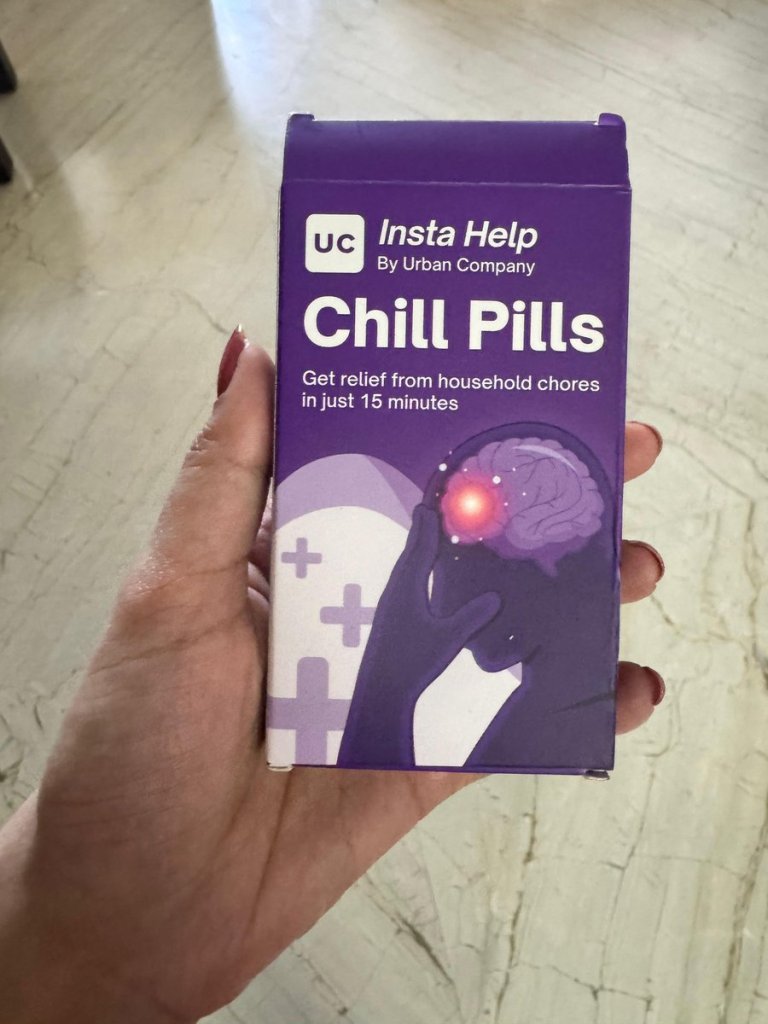
Later this evening, a friend from my apartment complex messaged. Urban Company, the newest victim of the fifteen minute gig economy, had set up a stall downstairs and was giving away free choppers as part of their fifteen minute home cleaning service. (don’t ask for correlation, especially not when a freebie is in the horizon)
“Are you there?” she asked.
“Yes,” I replied immediately. “Second in the queue.”
She was way behind me.
Do I need another chopper? Probably not. But would I have FOMO if I did not collect it? Absolutely.
Subscribe if you’d like to read more of my attempts to make sense of things through words.


 Primalsoup
Leave a comment