
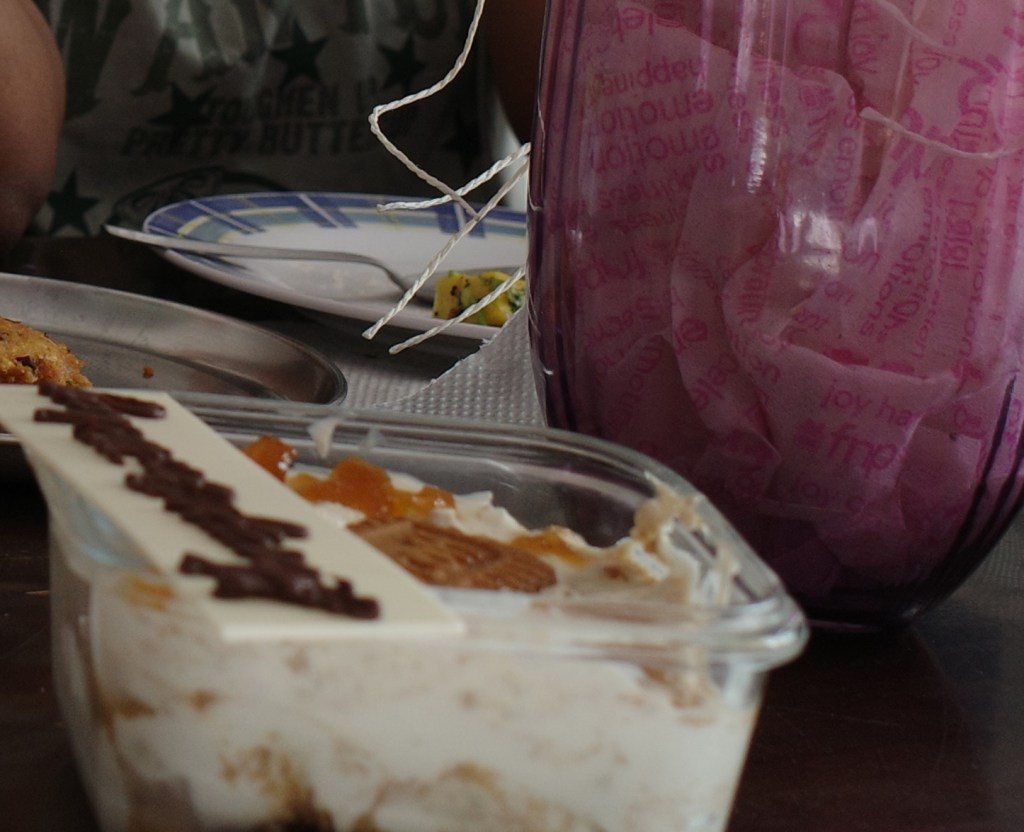
I made the Japanese Biscoff cheesecake.
I need you to understand what this means. I am a person who resists viral trends. I wait, I watch, I let the early adopters burn themselves on the hot oil of enthusiasm while I stand back, arms crossed, personality intact. I am not susceptible.
I made it after approximately the ten-thousandth reel. Give or take a few thousand, I stopped counting when counting became its own form of engagement. That’s when my resistance collapsed. Not because of any particular video, but because holding out had started to feel less like discernment and more like I simply hadn’t gotten around to it yet. My friends had made it. My family had made it. People who I know share my disdain for algorithmic enthusiasm had made it and posted it and used the word “jiggly.” I was not resisting a trend. I was just late.
So I made it. Greek yogurt and Lotus Biscoff biscuits, two ingredients, Japanese technique, zero countries of actual origin.
Let’s pause on the provenance. This “Japanese” cheesecake contains nothing from Japan. The Greek yogurt is almost certainly not Greek strained yogurt has been made across the Middle East and Mediterranean for centuries before someone in marketing decided “Greek” sounded cleaner than “Lebanese” or “Turkish.” Lotus Biscoff is Belgian, named after a flower from India, with a name that sounds vaguely German to anyone not paying attention. The recipe exists in a geography of nowhere, a rootless cosmopolitan dessert that claims three nations and belongs to none. Japan here functions as curator, not creator, the country that looked at Belgian biscuit spread and marketing-style strained yogurt and said, “what if we made this jiggly and called it ours?”
This is globalisation as the algorithm intended it. Provenance doesn’t matter; engagement does. The recipe doesn’t need a homeland because it has reach. Ten million views is its own terroir.
But let’s be honest about why I actually made it: the protein alibi. Greek yogurt is the wellness Trojan horse that allows dessert to enter the city of our better intentions. “It has protein,” I told myself, sticking cookies into strained milk solids. The macros as moral cover. We have collectively decided that sufficient protein justifies anything: protein brownies, protein ice cream, protein cookie bars that taste like whey powder and regret. The Biscoff cheesecake is simply the logical endpoint: a dessert that lets you eat sugar-laden cookies for breakfast because technically, technically, there is yogurt involved.
The two-ingredient promise seals the deal. There’s something seductive about radical simplicity, about the idea that deliciousness is two items and one bowl away. But there’s also accusation in it. You could have done this. Why didn’t you think of this? Every two-ingredient recipe is a small indictment of the complicated lives we’ve built around feeding ourselves.
The cheesecake, I should confess, is not my first capitulation.
There was the sourdough starter of 2020, born in the early weeks when cultivating a temperamental flour pet seemed like an appropriate response to civilisational collapse. I fed mine diligently. I named it something I am now too embarrassed to share. I talked about hydration percentages. Then I killed it, not deliberately, but with the quiet negligence of someone who had realised they didn’t actually want to bake bread every three days for the rest of their life. The starter’s death was a relief dressed up as a failure.
There was the dalgona coffee, which I resented on principle because I had been making it for over a decade. In my college hostel, we whipped instant coffee with sugar and warm water into a froth because we were poor and inventive and had no idea we were being avant-garde. Then the internet came along, gave it a Korean name and a photogenic glass, and suddenly I was being taught my own past as though it were a trend. I made it anyway. I photographed it. I participated in my own retroactive discovery.
There was the baked feta pasta, the banana bread we baked when we didn’t know what else to do with our hands or our fear. Each one photographed, posted, then quietly returned to the back of the culinary memory.
And here is what’s interesting: TikTok is banned in India. I have never used it, cannot access it, have only the vaguest sense of its interface. And yet every single one of these recipes tunneled through to my kitchen anyway, carried by Instagram reels and YouTube shorts and WhatsApp forwards from aunties who definitely also do not have TikTok. The content finds a way. The algorithm doesn’t need an app; it just needs a population willing to pass recipes hand to hand like samizdat, like we’re smuggling deliciousness across a digital border.
Some recipes remain safely theoretical. The 100-layer potato, for instance, exists so that we may watch it, not make it, the slow reveal of crispy sheets, the ASMR crunch, the implicit promise that you could do this if you simply had four hours and a mandoline and a complete disregard for your oil bill. I have watched it many times. I will never make it. Some trends are for viewing, not doing.
Which brings me to what I’ve been circling around.
I have spent years watching algorithms get me wrong. They serve me luxury I cannot afford, lives I do not lead, aspirations that belong to someone the data thinks I am but isn’t quite me.
But the Biscoff cheesecake? The algorithm read me perfectly. Japan, protein, simplicity, dessert: four keywords that might as well be my lock combination. It knew I would resist. It knew I would eventually stop resisting. It served me the same reel with minor variations until my resolve became the joke, until I was the last one in my feed who hadn’t made the thing, until making it felt less like surrender and more like finally arriving at a destination I’d been walking toward all along.
Being misread by an algorithm is funny. Being read accurately is something else. The uncanny valley of the self, a machine that knows your weaknesses better than you’d like, that can predict your capitulation before you’ve consciously decided to capitulate. I didn’t choose the Biscoff cheesecake. I was served it until choice became irrelevant.
The cheesecake sits in my refrigerator as I write this. Half of it remains, transferred from its original dish to a container whose lid doesn’t quite match. By tomorrow the edges will have dried slightly. By next week the container will be washed and returned to the cabinet, and the cheesecake will exist only as a photograph on my phone and a vague memory of having done the thing everyone else did.
This is how these recipes live and die. Not as affairs, exactly, but as guests who overstay by a day and then vanish completely. The sourdough starter’s jar is still somewhere in my kitchen, repurposed for something else. The dalgona coffee equipment, a hand whisk, a particular glass, has been reabsorbed into the general population of kitchenware. The feta-pasta baking dish has made other pastas since, none of them photographed.
By next month I will have returned to my regular desserts, the ones that don’t require a reel to justify, the ones that never promised to be simple or Japanese or high-protein. The ice cream that makes no claims about macros. The mithai during festivals, purchased not made, because some traditions resist the tyranny of the two-ingredient promise. The 600-calorie cheesecake from the bakery that is honest about what it is.
I made the Japanese Biscoff cheesecake. I am not proud, but I am not ashamed. I am simply a person who holds out until holding out becomes its own performance, then quietly joins everyone else in the kitchen, right on schedule.
The algorithm knew I would. It was just waiting for my resistance to become predictable.
Subscribe if you’d like to read more of my attempts to make sense of things through words.

 Primalsoup
Leave a comment