
(Or: What My CGM Taught Me About Human Behaviour)
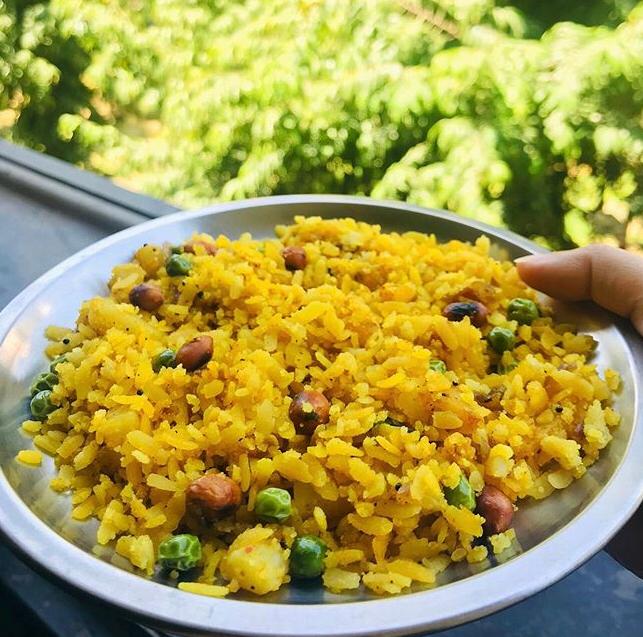
Exhibit A: The humble poha that broke my metabolic heart.
The Accidental Field Study
Every few months, I run a small, unapproved research project with a sample size of one: me.
The apparatus is a Continuous Glucose Monitor (CGM), a discreet sensor I stick on my arm, like a sticker for grown-ups who think they’re data. It promises metabolic insight but mostly gives me an excuse to stare at graphs that look important.
As a qualitative researcher, I’ve spent years believing numbers only tell part of the story, that the real meaning hides in contradictions, rituals, and what people say when they think they’re off-record. But the CGM gives me numbers, and I find myself treating them like gospel.
For two weeks, I collect data points and behavioural notes. I scan the sensor every few hours, logging food, mood, and stray guilt. Then I analyse: why did my glucose spike at 10:47 a.m.? Was it the bun maska, the meeting, or the quiet dread that comes from hearing my Google Drive go ding!
In this study, I am both respondent and researcher, rationalising my decisions, explaining away anomalies, and looking for patterns that make me feel consistent, if not better.
Methods (Loosely Defined)
Uncontrolled environment. Emotional variability. Frequent snacking.
I approach the CGM like a diary study, except instead of post-its and field notes, I have an app that sends polite notifications about my poor life choices.
Every few hours I scan my arm, pretending it’s a portal to self-knowledge instead of what it really is, a vanity metric dressed up as health data.
For two weeks, I live in an intimate relationship with a line graph: the highs, the lows, the unexplainable fluctuations that make me question everything from my lunch choices to my emotional stability.
Things I’ve learnt about myself:
- Coffee on an empty stomach is chaos. I mean CHAOS. Did I mention CHAOS?
- Stress spikes glucose faster than sugar… duh!
- Sleep is a bigger villain than sweets.
- My so-called “clean eating” looks metabolically identical to dosa day.
Findings: The Poha Problem
It was humbling. The foods I’d moralised for years – good, bad, clean, indulgent, didn’t behave the way I expected.
All the foods I assumed were villains, the mid-afternoon chocolate, the “just one bite” of dessert, barely caused a blip.
But the humble poha? The breakfast I thought was my moral high ground? That graph shot up, and my screen went from a calm green to an alarming red. Within minutes I was marching around my flat, getting my steps in, and swallowing a fistful of carom seeds (as instructed by WhatsApp University, another hack suggested soaking my feet in bitter gourd juice, but that felt like a full-time job).
Here’s the money shot of the research: if the CGM was meant to change my behaviour, it’s been a massive failure. What it has done is teach me that I’m more loyal to comfort carbs than to data.
Analysis: When Qual Meets Quant
If this were a usability study, I’d say my prototype performed as expected: the user (me) ignored the findings and kept using the product exactly as before.
The CGM gave me numbers, but not narratives. It told me what, not why. Quantitative data is seductive because it looks certain, but even in research, interpretation is everything. I looked at a glucose spike and saw guilt; someone else might see energy. Every data point is a story half-told, and humans rush to fill the gaps with meaning.
In UX, I watch people contradict themselves all the time: they say one thing, do another, then justify both. I used to call it user behaviour. Now I call it breakfast.
The poha incident reminded me of every participant who insists they’ll “definitely use” a new feature, even as their body language screams otherwise (and I can see them mentally calculating whether the incentive justifies having to deal with a moderator asking the same question sixteen different ways). Awareness rarely leads to change. Knowing is comforting. Doing is inconvenient.
Discussion: The Illusion of Insight
Behavioural science calls it the intention–action gap. I call it the dosa principle, that part of us that knows exactly what’s good for us and still reaches for what feels right.
Self-tracking devices promise transformation, but most of us use them to confirm what we already believe. We’re not changing behaviour.. you know um.. because where is the fun in that?!
The CGM hasn’t made me healthier, but it has made me more curious. Every spike is a story. Every dip is a mood. The data looks clean, but my interpretation never is.
Conclusion: Inconclusive Results
After two weeks of data, I learnt nothing new about my metabolism, but a lot about my mind.
My findings are inconclusive, my sample is biased, and my hypothesis remains untested.
Which, if you ask any qualitative researcher, still counts as a finding.
Subscribe if you’d like to read more of my attempts to make sense of things through words.

 Primalsoup
Leave a comment