
On disappearing, dressing down, and choosing clothes that don’t speak for you
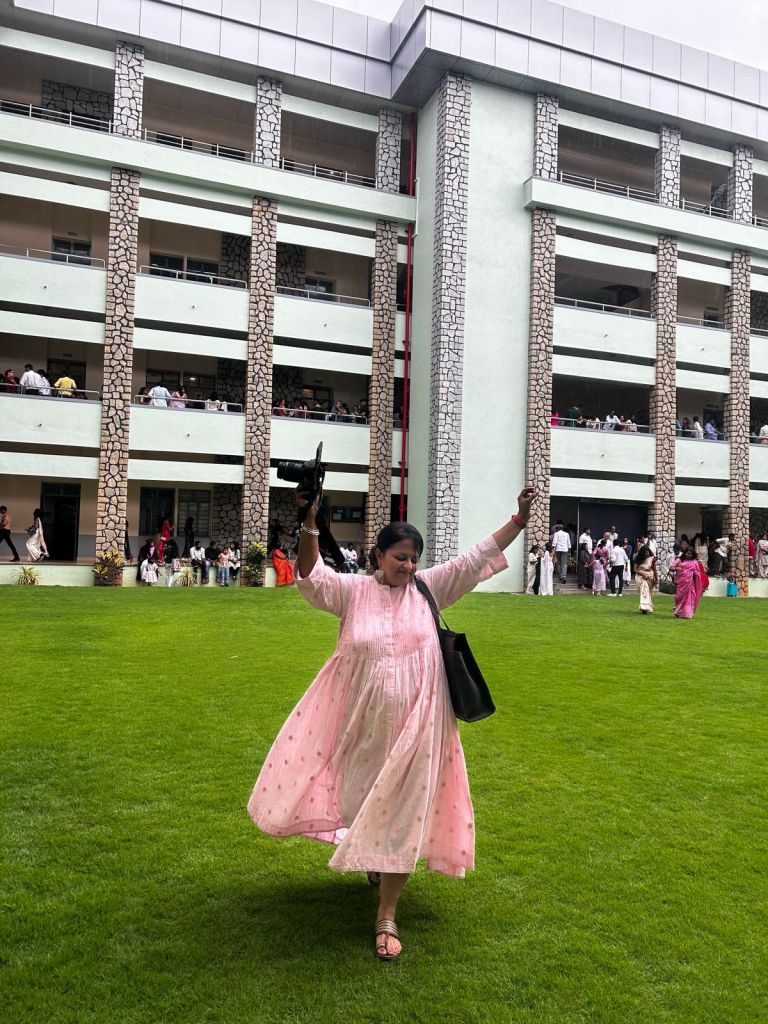
A dress is just a kurta that went to therapy.
A personal essay on what I wore, what I refused, and the quiet power of dressing for no one.
In my twenties, I wore clothes that let me disappear, loose kurtas that blended into dusty train seats and crowded markets.
I was a field researcher, on trains, in toilets, in towns you don’t see in magazine spreads. I wore kurta-salwar sets that were loose, unfussy, and instantly forgettable. They absorbed sweat, covered me generously, and never upstaged the room. I had cramps and insecurities and no patience for buttons. The dupatta – a long, versatile scarf, two and a half metres of misunderstood genius, wiped laptops, wiped seats, wiped tears. No one ever complimented my outfits, which was ideal. The best thing my clothes could do for me then was not get in the way. It was a life where what I wore didn’t need to mean anything.
Back home, though, my mother was building me a future in six-yard instalments.
A Banarasi, its intricate silk woven for celebrations. A Paithani from a crafts fair in Maharashtra, regal and weighty. A Sambalpuri she found after three stalls said they were out of stock. She wasn’t just collecting saris, she was collecting possibilities. Futures. Respectability in pleats. Femininity, folded.
I never wore them.
Once, she laid them all out on the bed – glorious in texture, colour, history. “Just pick one,” she said gently. “Try it on for the wedding next month. You’ll look lovely in the gold one.”
I looked at the saris like they might stain me. I ran my fingers over the silk, and almost immediately pulled away. “I don’t even have a blouse that fits,” I said, knowing it was just an excuse.
“I’ll get one stitched,” she offered. “You’ve never worn any of these.”
She didn’t say it with resentment. She said it with hope, as if each sari held a version of me she longed to meet.
I folded the sari back, tucking away her hope with it. I wasn’t ready for it. Not grown up enough.
The sari felt like something I hadn’t earned. Like wearing grace I hadn’t grown into. I didn’t know how to sit in one, breathe in one, or navigate a public toilet without rehearsing escape routes, keeping six yards of fabric off a wet floor while juggling my bag, my phone, my balance. The sari wasn’t wrong. I just wasn’t made for its choreography.
Then the internet had a sari awakening.
Linen saris with sneakers, yoga, even kickboxing, women in slow motion through mountains, fields, water bodies – their captions proclaiming “this is my softness, my resistance” with hashtags of looms and longing.
At first, I admired it. It was tender, proud, unapologetically regional.
But over time, what began as reclamation started to feel like performance. Another way of being beautiful. Another identity to caption and curate.
That’s when dresses entered the picture.
And I loved them.
They felt like kurtas that had been to therapy – boxy, pocketed, forgiving, and free of expectations. You could eat a buffet lunch in one and still make eye contact with yourself after. They didn’t demand approval. They offered release: ease from structure, from cling, from judgment. From the constant pressure to be read, decoded, or admired.
But I still wore pants when I left the house.
Not always consciously. But reliably. A holdover from some rulebook I can’t fully locate, Indian middle class modesty, or maybe just the need to feel tucked in. The kurta-salwar understood this. The dress only flirted with it. I wasn’t always ready.
Then life shifted again. I joined a tech startup, where efficiency trumped expression, and my wardrobe shrank to match (a uniform of simplicity for a world of code and deadlines).
Now I wear two company T-shirts, black for Mondays, white for Fridays, and a personal spectrum of black cotton for everything in between. I haven’t worn a dupatta in months. I don’t remember the last time someone said they liked what I was wearing, which is unsurprsing, given that on most days, I don’t remember what I’m wearing either.
And strangely, that feels right.
In a culture where clothing signals identity, there’s freedom in dressing without a story to tell, not invisible, not performative, just quietly myself.
I miss the kurta sometimes, not for what it looked like, but for what it allowed. Movement. Ambiguity. A quiet kind of permission to just exist between signals.
As writer Paromita Vohra once captured so perfectly:
“The salwar kameez is a thoroughly common, happily un-elite, nominally feminine dress—which is really why it’s considered infra-dig. But in many senses, it allows you to forget about your body and there’s such freedom in that, no? Like being in your own disco, dancing to your own tune.”
That’s exactly what it was.
My salwar kameez was my disco.
My dress was a half-hearted twirl.
My black T-shirt is just breathing.
No rhythm. No resistance. Just room.

 Primalsoup
Leave a comment